Onegin's Courtship of Tatiana
Eugene OneginOnegin’s Courtship of Tatiana reverses the earlier rejection between Eugene Oneguine and Tattiana Larina: the man who once refused her now loves her with the intensity of his youth and makes her the focus of his days and nights. His daily approach to her home, the love letter he writes despite his former dislike of correspondence, and the succession of messages that go unanswered turn belated passion into a pursuit that cannot undo the past.
The Reversal of Love
The narrator announces the change without ambiguity: Eugene now loves Tattiana as he did when he was a young man. The repeated emphasis on day and night makes the passion a condition that occupies his whole life, not a passing response. The reversal is sharpened by the history between them: Tattiana had once loved him and exposed that feeling, while Eugene had refused her. Now the positions have changed, but the change in feeling does not itself change what is possible between them.
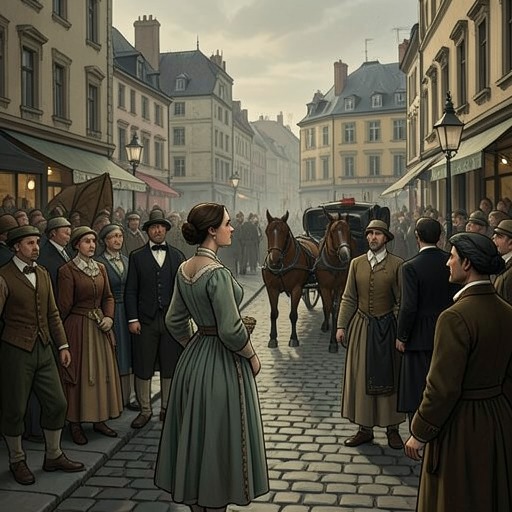
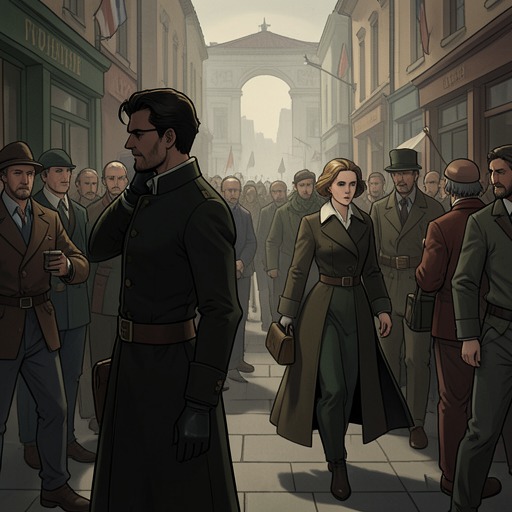
His love takes visible form in repeated approaches. Careless of social rules, he drives daily near the vestibule of Tattiana’s residence and haunts her like a shadow. The image suggests persistence without access: he can draw near, and he is enraptured when he is allowed even a glimpse, but proximity is not intimacy. The pattern makes his pursuit a continual orbit around a woman whose response he cannot command.
The Letter and Its Confession
At the opening of the Eighth Canto, Eugene is described as so unwell that he does not go out; the poem compares the courage sickness demands with that of health. With a trembling hand he scrawls a love epistle. The act is pointedly contrary to his habits: he used to hate correspondence and was no fool about its risks, yet he now turns to the very form he once disdained. The letter therefore registers not only his desire but a change in the conduct he once considered sensible.
The poem then presents the letter under the heading “Oneguine’s Letter to Tattiana.” Its opening admits that the secret he is about to disclose may sound like an insult to her. The wording frames his confession as a breach of the settled arrangement between them, not as an uncomplicated romantic overture. He remembers the pain and error of his past conduct and imagines seeing her face, following her everywhere, and attending to her smiling lips and bright eyes. Desire is rendered through the details of her presence, while his account of himself remains marked by regret.
Near the close, Eugene declares that he feels his allotted span is limited and that he must act in the morning if life is to last longer. He ends by naming the decision as irreversible and yielding both his life and fate into her hands. This language makes the letter an act of surrender: he places the outcome beyond his own control. But the force of his declaration lies in what it asks of Tattiana, and the letter cannot make her answer on its own.
Repeated Messages and the Limits of Pursuit
The narrative gives the letter an aftermath rather than treating confession as resolution. There is no answer. Eugene sends another epistle and then a third note, each of which remains unnoticed. The sequence turns correspondence into a measure of unequal attention: his messages multiply, while no reply enters the record. His former aversion to writing has become a desperate practice, but the change produces no reciprocal exchange.
That silence is the decisive consequence of the courtship as presented here. The passage establishes Eugene’s insistence, his exposed feeling, and his willingness to stake his remaining life on Tattiana’s response; it does not show the pursuit achieving consent or restoring their earlier possibility. The former roles have been inverted, yet the emotional reversal does not erase the consequences of Eugene’s earlier rejection. His final appeal yields control to Tattiana, and the unanswered letters leave that control—and the outcome—outside his hands.